
Daily News | 17-11-2026
Wholesale Inflation Rises To 12.29% In October
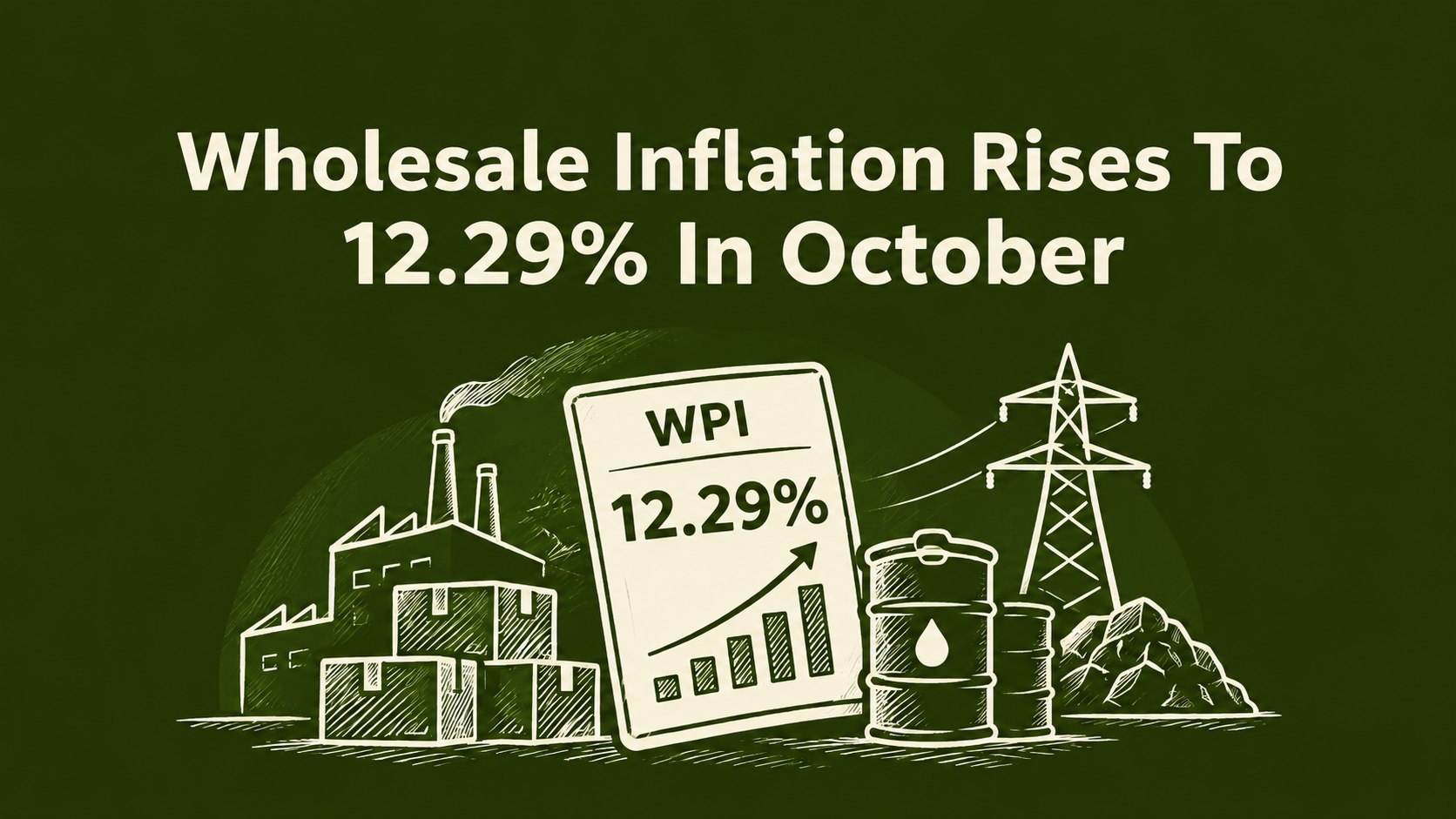
1. Wholesale inflation: WPI inflation rose to 12.29% in October from 11.39% in September, the highest in the current 2022-23 base-year series. The rise was driven mainly by a sharp jump in fuel and power prices and an adverse base effect. Fuel and power accounted for 83 bps of the 90 bps increase in the headline number.
2. Retail inflation: CPI inflation rose to a two-year high of 6.09% in October, breaching the RBI’s upper tolerance limit of 6%. The rise was led by food prices.
3. Fuel and power: Inflation in this group rose to 32.84% in October from 25.85% in September, the highest since at least April 2024. The prolonged West Asia crisis continued to push prices up. Crude petroleum and natural gas inflation rose to 70.8% from 57.32%, and coal to 10.5% from 9.3%. Electricity inflation turned positive at 8.06%, from -0.43% in September.
4. Food and primary articles: Primary articles inflation rose to 9.24% from 8.67%, the highest in 31 months. Within it, food articles inflation edged up to 8.26% from 8.14%, a 22-month high. The broader WPI food index, however, eased slightly to 8.58% from 8.66%.
5. Manufactured products: Inflation eased to 9.54% from the series high of 9.76% in September, but seven sectors, saw double-digit inflation.
RELATED INDIAN STOCK MARKET SECTORS
Sector 1: Electricity & Power Sector
Sector 2: Oil & Natural Gas Sector
Sector 3: Chemicals & Petrochemicals Sector
Sector 4: Food Processing Sector
Sector 5: Metals & Mining Sector
How Are They Related?
1. Electricity & Power Sector
This sector is related to inflation because electricity production depends heavily on coal, natural gas and other fuels. When coal and gas prices increase, the cost of generating electricity also increases. This puts pressure on power companies by increasing their operating expenses and potentially reducing their profit margins.
2. Oil & Natural Gas Sector
This sector is related to inflation because crude oil and natural gas are major sources of energy used across industries. When crude oil and natural gas prices increase, oil-producing companies may earn higher revenues, while refineries and companies that purchase these resources face higher costs. It can also increase petrol, diesel and transportation prices.
3. Chemicals & Petrochemicals Sector
This sector is related to inflation because many chemicals, plastics, fertilizers and other petrochemical products are manufactured using crude oil and natural gas as raw materials. When oil and gas prices increase, the cost of these raw materials also increases, raising manufacturing expenses and putting pressure on company profits.
4. Food Processing Sector
This sector is related to inflation because food processing companies depend on agricultural products such as wheat, sugar, edible oil, milk and other food ingredients. When food prices increase, companies have to spend more on raw materials. This increases production costs and may reduce profit margins if companies cannot increase the selling prices of their products.
5. Metals & Mining Sector
This sector is related to inflation because mining and metal production require large amounts of coal, electricity, diesel and other fuels. When fuel and electricity prices increase, the cost of extracting minerals and manufacturing metals such as steel and aluminium also increases. This puts pressure on production costs and company profitability.
Source: Business Standard
Disclaimer: I am not a SEBI-registered investment advisor or research analyst. The information in this post is shared for general awareness and educational purposes only, based on publicly available news reports. It is not investment advice, a recommendation, or an offer to buy or sell any security. The sector discussion is general economic reasoning and does not predict how any company or stock will perform. Investing in the stock market involves risk, including loss of capital. Please do your own research or consult a SEBI-registered financial advisor before making any investment decision.
– The End –